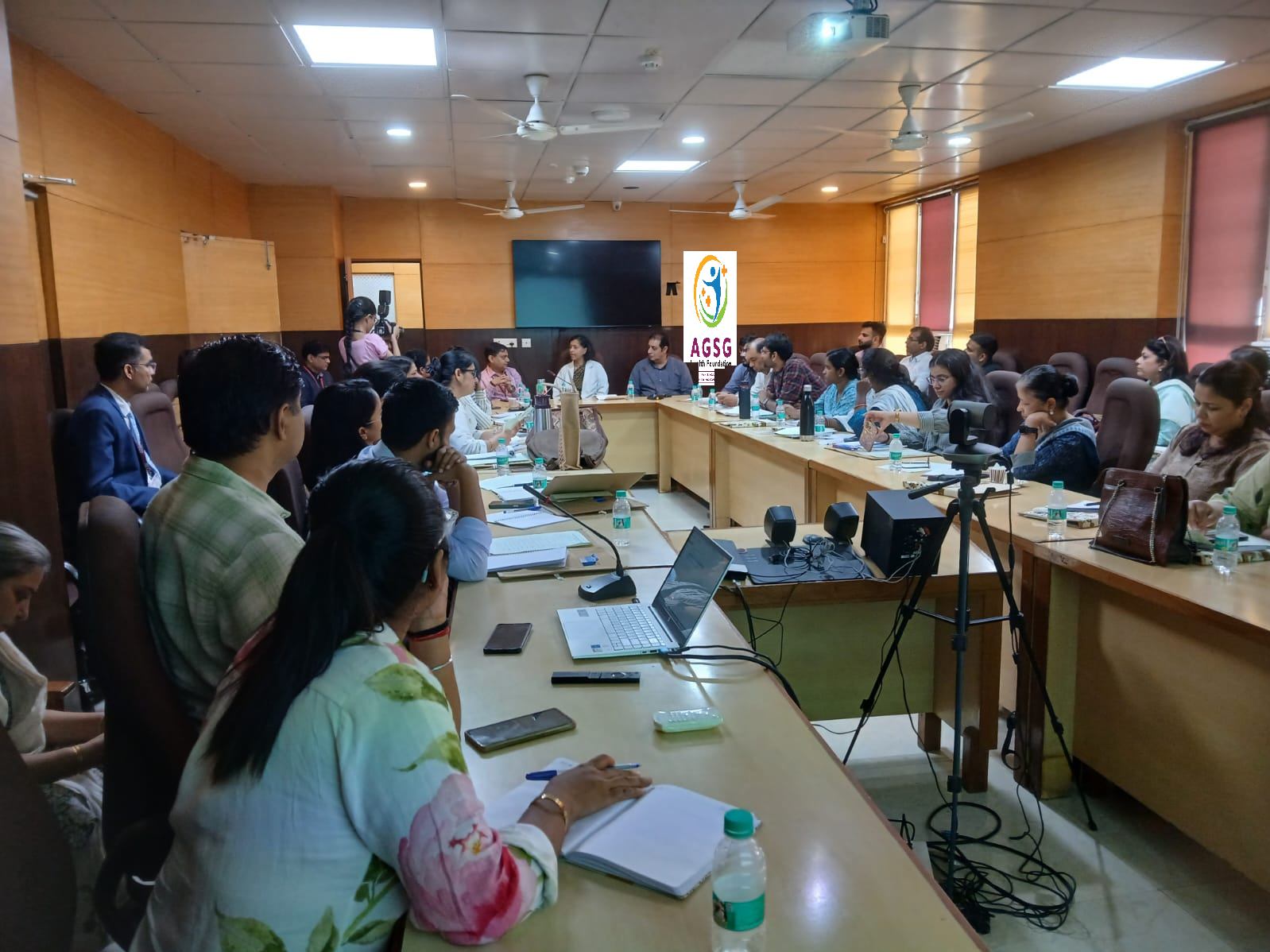


On August 8th, 2025, the Delhi State National Programme for Prevention and Control of Deafness (NPPCD) organized a critical Medical Officers Training Programme. Held at the Lecture Theater in the Pathology Block of Maulana Azad Medical College, New Delhi, the event was a collaboration with the ENT & Community Medicine Departments of MAMC, Sound Hearing 2030, and AGSG Health Foundation. 🏥
The programme was meticulously designed to enhance the capabilities of medical officers in ear and hearing health, from both clinical and public health standpoints. It aimed to provide in-depth knowledge on anatomy, disease diagnosis, preventive strategies, hearing aid management, and the integration of ear health into national health initiatives.
Programme Overview: Key Sessions
The training featured a comprehensive lineup of sessions led by distinguished experts:
1. Introduction: Dr. Shintoo Doorma
2. National Programme for Prevention & Control of Deafness in India: Dr. Arun Kumar Agarwal
3. Training Sessions Orientation: Dr. Suneela Garg
4. Introduction to Ayushman Bharat: Dr. Suneela Garg
5. Anatomy and Physiology of the Hearing: Dr. Ravi Meher
6. Examination & Diseases of the Outer Ear & Middle Ear: Dr. Ravi Meher
7. Prevention of Hearing Loss & Deafness: Dr. Swati Tondon
8. Assessing Hearing & Prescription of Hearing Aids: Dr. Swati Tondon
9. Definition of Role & Monitoring: Dr. Nidhi Bhatnagar
10. Responsibilities under RBSK & RKSK: Dr. Nidhi Bhatnagar
Session Highlights
1. Introduction by Dr. Shintoo Doorma
The opening session, led by Dr. Shintoo Doorma, State Programme Officer, Delhi, set the tone for a multi-faceted learning experience. He stressed the role of medical officers as both clinical practitioners and community health advocates. Dr. Doorma also explained the budget of Delhi State and its districts, mentioning past activities and encouraging the planning of two monthly activities in each district. 📈
2. NPPCD Program: An Overview by Dr. Arun Kumar Agarwal
Dr. Arun Kumar Agarwal presented an overview of the NPPCD, its operational framework, hearing aid eligibility criteria, and distribution centers. He stressed preventive strategies, identified challenges, and advocated for increased budget allocation to scale up services. Dr. Agarwal noted that the NPPCD Programme (Sharvan Shakti Abhiyan) focuses on distributing hearing aids through 67 centers. He addressed Hearing Health Concerns and suggested prevention measures, including avoiding high volume and prolonged headphone use (80-90dB). He concluded by mentioning the plan to open centers in Delhi and his intention to approach the Ministry of Health for budget allocation for the hearing aid program. 👂
3. Training Sessions Orientation by Dr. Suneela Garg
Dr. Suneela Garg introduced participants to the overall training objectives, highlighting the global and national burden of hearing loss. She emphasized the critical role of early detection, treatment, and rehabilitation, and the importance of integrating ear and hearing health into primary healthcare services. She also posed the questions: What is the Need for Prevention of Hearing loss & Deafness? and What difference can we make…? She detailed manpower training objectives and the importance of capacity building at the cascade level to provide better, more organized services to the community. 🗣️
4. Introduction to Ayushman Bharat: Dr. Suneela Garg
Dr. Suneela Garg explained the objectives, structure, and benefits of the Ayushman Bharat scheme, with a focus on Health and Wellness Centres (HWCs) for delivering ear and hearing care. She stressed the importance of embedding these services within national and state-level health initiatives to maximize reach and sustainability. This included incorporating ear and hearing care into RBSK & RKSK (Rashtriya Bal Swasthya Karyakram and Rashtriya Kishor Swasthya Karyakram) and addressing the “4 delays” in healthcare access. She also informed participants that Ear and Hearing Care (ENT) is now being added to the 12 task force programmes under RBSK and RKSK. 🌐
5. Anatomy and Physiology of Hearing by Dr. Ravi Meher
He provided foundational knowledge on the structural and functional aspects of the ear, covering outer, middle, and inner ear anatomy, as well as neural pathways of hearing. His discussion included topics like otosclerosis, routine ear examinations in district hospitals, and monitoring ear and hearing-related issues. 🧠
6. Examination & Diseases of the Outer and Middle Ear: Dr. Ravi Meher
Dr. Ravi Meher covered techniques for otoscopic examination and common presentations of diseases such as otitis externa, otitis media, tympanic membrane perforations, and wax impaction. He also discussed red flag symptoms that require urgent referral. 🩺
7. Prevention of Hearing Loss & Deafness: Dr. Swati Tondon
She outlined preventive measures including safe listening practices, immunization against infections that can cause hearing loss, early management of ear infections, and public health education campaigns. Her talk reinforced the importance of proactive care in preventing irreversible damage. 🛡️
8. Assessing Hearing & Prescription of Hearing Aids: Dr. Swati Tondon
Dr. Tondon explained detailed methods of hearing assessment, including tuning fork tests, pure tone audiometry, and impedance audiometry. She covered the criteria for prescribing hearing aids and the process of fitting and patient counselling. Her talk also addressed Hearing Aids and Related Services, the Management and Maintenance of Hearing Aids, and surgical interventions like Cochlear Implants. She highlighted the importance of Neonatal Screening (using methods like OAE and BERA) and the role of Assistive Devices and Rehabilitation Devices. 🧑⚕️
9. Definition of Role & Monitoring: Dr. Nidhi Bhatnagar
Dr. Nidhi Bhatnagar defined the specific responsibilities of medical officers in monitoring hearing health at the community level, discussing data reporting and follow-up systems. She also provided practical advice, such as “How to pour ear drops,” and explained how Health and Wellness Centers can streamline patient services and referrals to district hospitals without delays. 📝
10. Responsibilities under RBSK & RKSK: Dr. Nidhi Bhatnagar
Dr. Nidhi Bhatnagar further described the integration of ear health services into the Rashtriya Bal Swasthya Karyakram (RBSK) for children and the Rashtriya Kishor Swasthya Karyakram (RKSK) for adolescents, emphasizing school-based screening and awareness campaigns. 👦👧
Key Technical and Public Health Topics Covered
The training provided both theoretical and practical insights into critical aspects of ear and hearing health, including eligibility criteria, preventive strategies, diagnosis, rehabilitation, and integration into existing public health frameworks.
Conclusion
The Medical Officer Training Programme was highly effective in improving the clinical skills and public health understanding of participants regarding ear and hearing care. Through comprehensive lectures, interactive discussions, and practical guidance, the programme strengthened the ability of medical officers to diagnose, treat, and prevent hearing loss while actively contributing to national health programmes. The integration of ear health into broader public health initiatives is expected to improve access to care, enhance prevention, and ultimately reduce the burden of hearing impairment in the community. 🌟