



On August 5th, 2025, BPS Medical College, in collaboration with Sound Hearing 2030 and AGSG Health Foundation, organized an insightful and impactful seminar focused on “Safe Listening Practices.” This event was a key part of the global “Make Listening Safe” initiative launched by the World Health Organization (WHO). 🩺
The seminar’s primary aim was to raise awareness about noise-induced hearing loss and promote strategies to prevent avoidable auditory damage, with a special focus on youth. It was a day filled with knowledge, creativity, and a strong call to action for ear health conservation.
Rangoli Display: A Visual Message
To kick-start the event, undergraduate students created a beautiful and meaningful Rangoli floor art on the theme of safe listening. This creative representation served as a visual anchor for the seminar’s core message and captivated the attention of all attendees. 🎨
Key Elements of the Rangoli:
The Rangoli featured a Central Ear and Sound Waves Symbol, represented by a blue circle with a stylized ear and sound wave motifs. It also included Yellow Headphones to represent personal audio devices, which are often misused. The design incorporated Volume Control Icons, with a White symbol for “Volume Down” to represent moderation and a Green symbol for “Volume Up” showing controlled increase. Finally, the art was anchored by the bold text, “SAFE LISTENING,” which emphasized the seminar’s core purpose. This stunning artwork effectively promoted awareness of recreational sound exposure and highlighted strategies to mitigate hearing damage through volume control and limited exposure.
Opening Address by Dr. Swarn Kaur
Dr. Swarn Kaur, Acting Director of BPS Khanpur Kalan, warmly welcomed all dignitaries, faculty, students, and participants. In her address, she highlighted the critical need to sensitize young individuals to the health risks associated with noise exposure. She lauded the initiative as a vital step towards preventive ear healthcare. 👏
Speakers and Presentations
The seminar featured an impressive lineup of experts who shared their valuable insights on various aspects of safe listening.
1. Dr. Uma Garg: Safe Listening Initiative & NIHL
Dr. Uma Garg, Director Professor & Head of ENT at BPS Medical College, spoke about WHO’s launch of the Safe Listening Initiative in 2015. She discussed Noise-Induced Hearing Loss (NIHL) and how modern lifestyle, technology use, and environment contribute to it. Dr. Garg stressed the need for health worker awareness, community engagement, and stakeholder participation, sharing preventive strategies and management guidelines for early intervention.
2. Dr. Suneela Garg: Magnitude of Hearing Loss
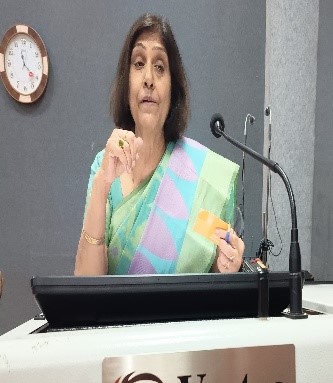
Dr. Suneela Garg, Hony. Secretary General of Sound Hearing 2030, delivered an insightful talk on the global and Indian burden of hearing loss. She cited statistics showing rising cases due to environmental and recreational noise and called for stronger screening programs, community outreach, and policy involvement. 📊
3. Dr. Naveen Sharma: Early Diagnosis & Management
Dr. Naveen Sharma, Professor of ENT at BPS Medical College, emphasized early detection through routine check-ups and awareness. He highlighted ENT-based interventions and treatment protocols, encouraging participation in activities such as screening camps, poster & video competitions, and ear care awareness campaigns.
4. Dr. Arun Kumar Agarwal: Safe Listening & Ototoxicity
Dr. Arun Kumar Agarwal, Hony. Chairperson of Sound Hearing 2030, addressed the role of ototoxic medications, environmental factors, and behavioral patterns that can exacerbate hearing loss. He introduced the concept of “Auditory Detox” and its relevance in modern living. 🎧
He also highlighted the International Telecom Union (ITU) guidelines and recommended 60% maximum volume usage, the use of noise-cancelling headphones, adherence to ITU guidelines, and awareness of Sound Pressure Levels (SPL), particularly the risks of 120 dB exposures.
5. Dr. S.K. Jha: Educational & Behavioural Strategies
Dr. S.K. Jha, Director Professor & Head of Community Medicine at BPS Medical College, discussed educational and behavioral strategies with an emphasis on Information, Education, and Communication (IEC). He proposed community engagement through street plays/skits, health melas, school programs, and radio & local media campaigns. He also suggested sound monitoring in public venues and SMS reminder systems.
Youth & School Involvement
Youth committees were encouraged to take pledges for safe listening. Recognition was proposed for responsible DJ practices. Awareness was also raised about the dangers of sound levels exceeding 85 dB for 8 hours, or 120 dB exposures over 5 days/week. 📢
6. Dr. Ravi Meher: Noise-Induced Hearing Loss (NIHL)
Dr. Ravi Meher, Director Professor & Head of ENT Department at Maulana Azad Medical College, New Delhi, provided a detailed explanation of Noise-Induced Hearing Loss (NIHL). He described it as a prevalent and irreversible condition caused by exposure to loud noises, resulting from damage to the hair cells in the cochlea. 🔊
Dr. Meher explained that NIHL can manifest in two forms: Temporary Threshold Shift (TTS), where hearing temporarily diminishes but recovers after a period of rest, and Permanent Threshold Shift (PTS), which is permanent and results from prolonged exposure to harmful noise levels.
He identified primary risk factors for NIHL, including occupational exposure in noisy environments and recreational activities like listening to music at high volumes. Common symptoms include difficulty hearing high-frequency sounds, persistent ringing in the ears (tinnitus), and a gradual decline in hearing ability. He stressed that preventative measures are essential, including safe listening devices and systems, monitoring sound levels in venues, creating quiet zones, using personal hearing protection, proper venue acoustics and system design, and training personnel for safe sound practices. Once the damage is done, however, it is irreversible, underscoring the importance of early intervention and protective strategies.
Medical Insights: Manifestations of Auditory Damage
A presentation slide highlighted common signs of hearing damage as per WHO standards: tinnitus (ringing in the ears), hyperacusis (heightened sensitivity to sound), difficulty hearing in noisy environments, and hearing loss (partial or total inability to hear). These symptoms are critical indicators of serious auditory issues and must be addressed promptly. ⚠️
Quiz: A Test of Knowledge
Dr. Ravi Meher prepared an online quiz on ear, hearing care, and safe listening, in which more than 110 people participated. The winner was Dr. Jyoti, a first-year undergraduate student from BPS Medical College, who received a book on “ENT and Head-Neck Surgery” authored by Dr. Ravi Meher himself. 🏆
Conclusion
The seminar at BPS Medical College was a comprehensive and educational initiative aimed at addressing the growing concern of hearing loss due to environmental and recreational noise. With active participation from medical experts, faculty, students, and community representatives, the event fostered awareness, inspired behavioral change, and reinforced the importance of hearing conservation through responsible listening practices.
Recommendations & Takeaways:
The seminar provided crucial takeaways for attendees, including the need to limit exposure to high-volume sounds by following the 60/60 rule, promoting the use of safe-listening technologies, and integrating safe listening education in schools and colleges. It also underscored the importance of strengthening community-based awareness programs and establishing safe sound level policies in public events and venues.